

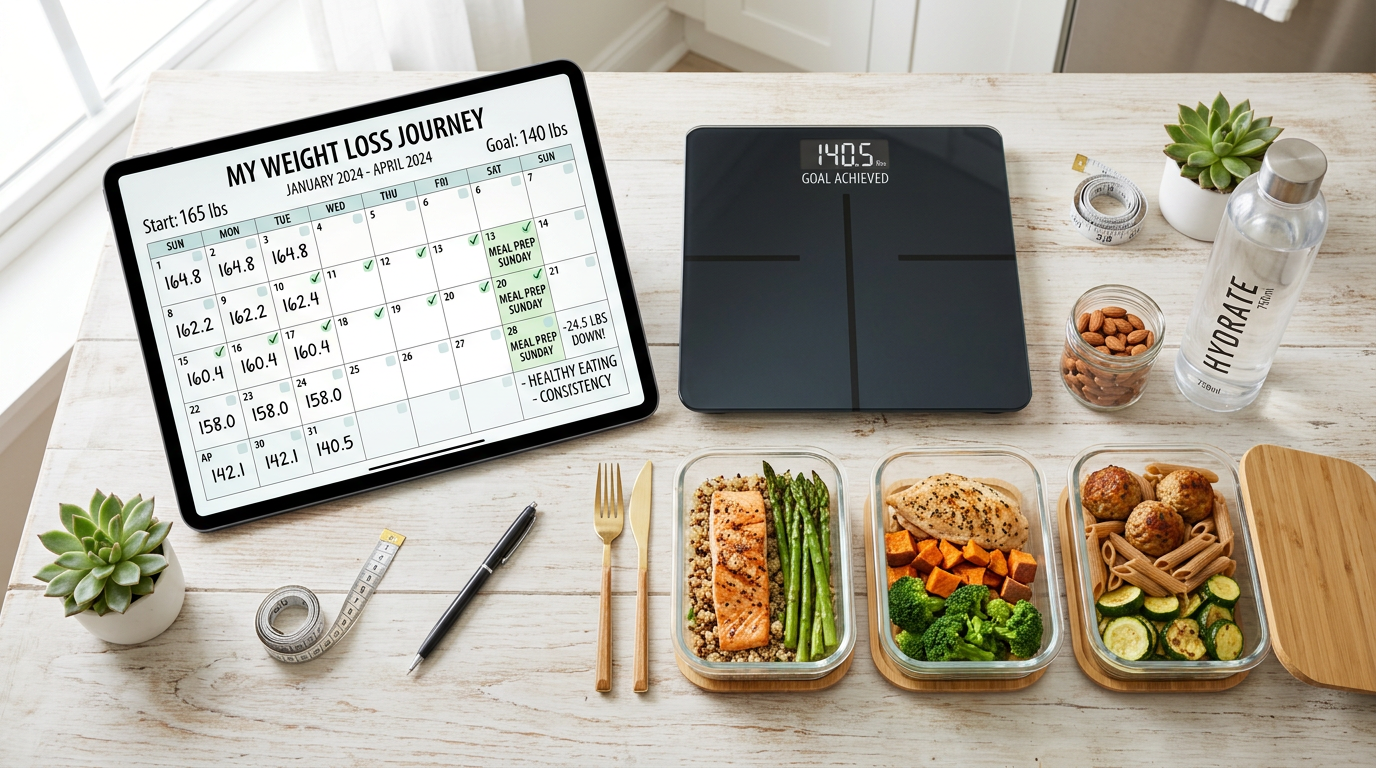

Starting a weight loss journey is exciting — until the scale seems frozen and the mirror looks unchanged. One of the most common reasons people quit is unrealistic expectations about the timeline. Here is an honest, science-based answer to: how long does it take to see weight loss results?
Why the Timeline Varies So Much
Weight loss speed depends on your starting weight (those with more to lose see faster initial results), your caloric deficit size, your activity level, your hormonal environment (cortisol, thyroid, insulin), sleep quality, water retention patterns, and the composition of what you’re losing (water vs fat vs muscle). Two people on identical programs can see very different timelines — which is why comparing yourself to others or to social media transformations is counterproductive.
Week 1–2: Water Weight and Glycogen
Most of the dramatic early weight loss seen on crash diets is water weight. When you cut carbohydrates or calories, glycogen (stored carbohydrate in muscles and liver) is depleted. Each gram of glycogen holds 3–4 grams of water — so depleting glycogen rapidly reduces scale weight by 3–8 pounds in the first 1–2 weeks. This looks impressive but is not fat loss. It also returns immediately if you resume eating normally. True fat loss begins at week 2 and beyond.
Weeks 2–4: First Measurable Fat Loss
With a 500-calorie daily deficit (a sustainable, evidence-based approach), expect approximately 1 pound of actual fat loss per week. After 4 weeks, that is 4 pounds of fat loss. You may not visibly notice 4 pounds — fat is distributed across the whole body and 4 pounds may not be visible on your specific body composition. However, measurements (waist, hips) often show change before the mirror does.
When You Actually See It in the Mirror: 4–8 Weeks
Most people notice visible changes in the mirror between 4–8 weeks, depending on starting weight. Those starting heavier often notice face and neck changes first (faces thin noticeably before the body). Those starting leaner may see abdominal definition emerge first. Clothes typically feel looser before the mirror shows a dramatic difference — use how clothes fit as your primary feedback tool, not daily scale readings.
When Others Notice: 8–12 Weeks
Research suggests that other people begin to notice weight loss at around 8–12 pounds of fat loss for most body types — corresponding to roughly 8–12 weeks at a 500-calorie deficit. This is why the 3-month mark is a meaningful milestone.
Why the Scale Lies in the Short Term
The scale can fluctuate by 2–5 pounds daily due to water retention (from sodium, hormones, or carbohydrate intake), inflammation from intense exercise (muscles hold water when repairing), menstrual cycle phase (many women retain 3–7 pounds of water in the week before their period), and bowel contents. Never judge progress by a single weigh-in. Weigh daily at the same time and take a weekly average — this smooths the noise and shows the true trend.
Sustainable Rate of Loss
The evidence-supported optimal rate of fat loss is 0.5–1% of body weight per week. Faster loss significantly increases muscle loss (which reduces metabolism long-term) and is associated with higher rates of weight regain. Slow, steady fat loss while maintaining muscle produces the best long-term results and body composition.
The 3-Month Reframe
Instead of asking “when will I see results?”, ask “what will I have built in 3 months?” Three months of 500-calorie deficit + resistance training 3x/week + adequate protein produces approximately 12 pounds of fat loss and increased muscle tone — a genuinely transformative change that most people will see clearly in photos. The people who achieve this are those who committed to 12 weeks regardless of what the scale showed in week 2.