

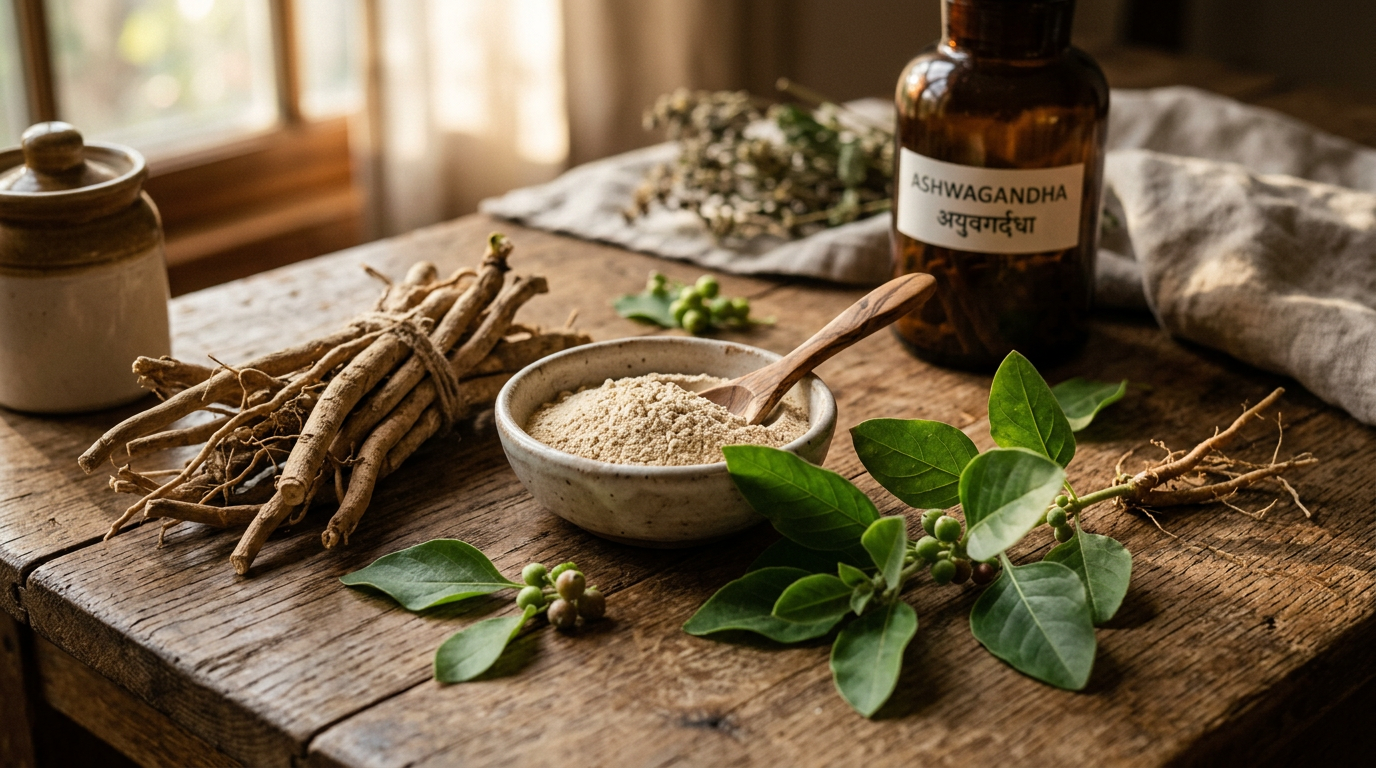

Ashwagandha (Withania somnifera) is an adaptogenic herb from Ayurvedic medicine with over 3,000 years of use and a rapidly growing body of modern clinical evidence. While it is marketed broadly as a “stress herb,” the research on ashwagandha benefits for women specifically reveals a much wider range of effects worth understanding before supplementing.
How Ashwagandha Works
Ashwagandha’s active compounds — primarily withanolides — work as adaptogens: substances that help the body adapt to stress by modulating the hypothalamic-pituitary-adrenal (HPA) axis. They reduce excess cortisol, support thyroid function, modulate immune activity, and improve mitochondrial energy production. The effects are dose-dependent and build over 4–8 weeks of consistent use.
8 Science-Backed Ashwagandha Benefits for Women
1. Dramatically Reduces Cortisol and Stress
The most robust evidence. A double-blind RCT (KSM-66 extract, 300mg twice daily) showed a 27.9% reduction in cortisol levels and significant improvements in all stress measures after 60 days. Another study found 600mg daily reduced perceived stress by 44% and anxiety by 76% compared to placebo. This makes it one of the most evidence-backed natural interventions for chronic stress.
2. Improves Sleep Quality
Ashwagandha contains triethylene glycol, which induces sleep by acting on GABA receptors. A 2019 clinical trial found 300mg of ashwagandha root extract twice daily significantly improved sleep onset, sleep quality, mental alertness on waking, and reduced anxiety after 10 weeks. Particularly beneficial for women with stress-related insomnia.
3. Supports Thyroid Function
Studies show ashwagandha increases T3 and T4 thyroid hormone levels in people with subclinical hypothyroidism. For women (who are 5–10x more likely than men to have thyroid disorders), this is significant. A 2018 study found 600mg daily significantly improved thyroid hormone levels in subclinical hypothyroid patients after 8 weeks.
4. Hormonal Balance and PCOS
Ashwagandha helps regulate LH, FSH, and progesterone. Studies show it improves ovarian function, reduces testosterone in women with PCOS, and supports more regular menstrual cycles. It may also reduce the cortisol-driven androgen production that worsens PCOS symptoms.
5. Menopause Symptom Relief
A 2021 study of perimenopausal women found ashwagandha supplementation significantly reduced hot flashes, sleep disturbances, mood swings, and urogenital symptoms compared to placebo. The cortisol-balancing and estrogen-supporting properties appear responsible.
6. Strength and Exercise Performance
Eight-week studies consistently show ashwagandha increases muscle strength, improves recovery time, and reduces exercise-induced muscle damage. For women pursuing body composition goals, it provides meaningful performance enhancement alongside resistance training.
7. Cognitive Function and Memory
A 2020 study found ashwagandha significantly improved memory, attention, information processing speed, and executive function. It appears to promote acetylcholine signaling and protect neurons from the cortisol-induced damage that impairs memory under chronic stress.
8. Libido and Sexual Health
A double-blind RCT of 50 women found ashwagandha root extract significantly improved sexual function across all measures including arousal, lubrication, orgasm, and overall satisfaction after 8 weeks. The proposed mechanism involves improved adrenal health and blood flow.
Dosage and Forms
The most studied extract is KSM-66 (full-spectrum root extract) at 300–600mg daily. Sensoril is another well-studied extract. Avoid products that do not specify extract type. Take with food to improve absorption and reduce any stomach discomfort. Results typically begin at 4 weeks and peak around 8–12 weeks.
Who Should Avoid It
Pregnant women (may cause uterine contractions), people with autoimmune conditions (it stimulates immune activity), those on thyroid medications (monitor thyroid levels), and people taking benzodiazepines or sedatives (additive effect).